Just How Assisted Living Promotes Social Involvement and Wellness
Business Name: BeeHive Assisted Living Homes of Rio Rancho NM #1 - Dementia Care & Memory Care
Address: 204 Silent Spring Rd NE, Rio Rancho, NM 87124
Phone: (505) 221-6400
BeeHive Assisted Living Homes of Rio Rancho NM #1 - Dementia Care & Memory Care
BeeHive Assisted Living Homes of Rio Rancho NM #1 - Dementia Care & Memory Care is a premier Rio Rancho Assisted Living facilities and the perfect transition from an independent living facility or environment. Our Alzheimer care in Rio Rancho, NM is designed to be smaller to create a more intimate atmosphere and to provide a family feel while our residents experience exceptional quality care. We promote memory care assisted living with caregivers who are here to help. Memory care assisted living is one of the most specialized types of senior living facilities you'll find. Dementia care assisted living in Rio Rancho NM offers catered memory care services, attention and medication management, often in a secure dementia assisted living in Rio Rancho or nursing home setting.
204 Silent Spring Rd NE, Rio Rancho, NM 87124
Business Hours
When family members assisted living rio rancho nm begin comparing care options, the discussion usually begins with safety. That makes sense. Drug support, aid with showering, meal solution, and trustworthy guidance matter a large amount. However after a few visits to neighborhoods, another question generally increases to the surface: what will life actually really feel like?
That question is usually the transforming point. Several older grownups do not need a nursing environment, however they do need more link, even more framework, and much more chances to stay active than they are accessing home. Assisted living can load that gap in a sensible, human means. It supplies assistance with the tasks that have actually become challenging while developing a setup where people can still make choices, keep routines, and develop connections. For several homeowners, that mix adjustments everything.
Social involvement and wellness are not different advantages of assisted living. They strengthen each other. A resident who signs up with a morning exercise course is more likely to talk with next-door neighbors later. A person that comes to dinner in the neighborhood dining room is much less most likely to skip a meal. An individual that really feels recognized by staff and peers is more likely to speak up about pain, solitude, or a modification in health and wellness. These are not abstract advantages. They shape life in quantifiable, noticeable ways.
The social isolation trouble is often underestimated
It is very easy to presume that living alone is just a problem if a person is physically unsafe. In method, isolation can impact a person long prior to a crisis lands them in the medical facility. Older adults may stop driving, shed a partner, create vision or wheelchair problems, or simply discover that the circle of pals they once counted on has actually gotten smaller. Even with household nearby, the hours between visits can be lengthy and quiet.
That sort of seclusion adjustments actions. People may consume much less due to the fact that preparing meals seems like excessive initiative. They might rest at strange hours, move less, or stop adhering to a regimen that as soon as kept them consistent. Gradually, the days blur with each other. The absence of interaction can make small troubles feel much heavier. A missed prescription refill ends up being extra severe. A minor autumn results in a week of reluctance. A little sadness becomes a larger withdrawal.
Assisted living is created to disrupt that pattern. The environment itself matters. Dishes occur at predictable times. Activities are uploaded and very easy to join. Team member observe when someone has not come out of their house. There is a natural rhythm to the day, which rhythm maintains individuals linked to something bigger than their own 4 walls.
Wellness begins with the regular moments of the day
Wellness in assisted living is not restricted to official shows. It begins with simple routines that support the body and mind. A resident might wake up to breakfast prepared by someone else, take a medication on time, walk to a common location, and invest the early morning chatting with a next-door neighbor prior to lunch. None of that appears significant, however those ordinary minutes frequently do more for health and wellness than a once-a-month event ever before could.
Nutrition is a good example. Lots of older grownups living in the house progressively slide into inadequate eating behaviors. They may rely upon crackers, salute, or convenience food since food preparation has actually ended up being troublesome or physically requiring. In assisted living, dishes are normally planned and offered frequently, which gets rid of a major obstacle. That alone can aid with power, mood, and drug effectiveness.
Hydration is an additional ignored problem. An individual who spends the majority of the day alone may just fail to remember to consume sufficient water. In a community setup, drinks are supplied throughout the day, and staff typically notice when someone is not drinking well. That type of watchfulness appears small till it protects against an urinary infection, lightheadedness, or a fall.
Sleep can enhance also. Individuals tend to rest better when days have structure, evenings are calmer, and there is much less anxiousness regarding household tasks. A resident does not need to fret about cutting the yard, repairing a damaged faucet, or taking care of a full fridge prior to a snowstorm. Relief from those concerns belongs to health too.
Community life makes involvement easier
One of the most significant strengths of assisted living is that engagement is constructed into the atmosphere. Residents do not have to drive across town or coordinate numerous schedules to see individuals. They can get out of their apartments and find a card game, a movie, a discussion team, a craft table, or a going to artist. That simplicity matters more than lots of family members expect.
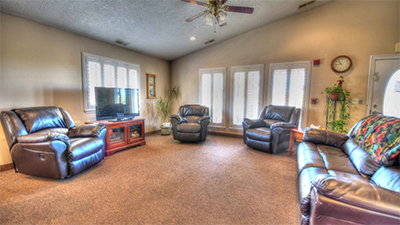
I have actually seen adults that were virtually quiet in household setups come alive in a community room due to the fact that the public opinion is reduced and the setup is much more acquainted. They are not executing for their grown-up kids. They are simply signing up with peers that recognize the exact same life phase, the exact same losses, and commonly the same completely dry wit. Friendships develop from repetition. A person that sees the same neighbor every Tuesday and Thursday might not call that "programming," yet it is specifically how link grows.
The ideal communities do not compel extroversion. They use low-pressure opportunities. Not everyone wishes to join a dynamic bingo video game, and that is great. Some citizens choose individually conversation, religious time, horticulture, or a silent team exercise class. Good assisted living respects those differences. It develops sufficient selection that a resident can locate a rhythm that suits their individuality and power level.
Social engagement supports cognitive and psychological health
Loneliness is not simply unpleasant. It can impact thinking, inspiration, and emotional durability. When a person invests too much time alone, it ends up being more challenging to stay emotionally sharp and involved. There is less conversation, less opportunities to remember names or stories, and less minutes that require interest and reaction. Assisted living produces a richer daily social environment that helps keep the mind active.
This does not suggest social life stops amnesia or replaces healthcare. It does mean that a resident is more probable to be stimulated in small yet meaningful ways. They may adhere to a conversation regarding existing occasions, bear in mind lyrics throughout a singalong, or assist a next-door neighbor bear in mind an activity time. These interactions exercise recall and language in ways that feel natural, not clinical.
Emotional health advantages as well. People often ignore just how much stress and anxiety is decreased when someone else is around to see an adjustment in state of mind. A resident who has had a rough morning is more probable to state it when a personnel sign in or a friend asks how they are doing over lunch. That small opening can cause useful support. Often it is a matter of redirecting someone to an activity. Occasionally it is recognizing that grief, discomfort, or complication is aggravating and is entitled to attention.
For households looking for senior living, this is one of one of the most vital differences to search for. A community can have wonderful style and refined advertising, however if residents spend a lot of their time alone, the social worth is limited. The inquiry is not only whether the neighborhood offers activities. The actual question is whether individuals actually gather.
Fitness and flexibility enhance when activity becomes social
Exercise is easier to maintain when it is connected to routine and companionship. A person who should motivate themselves to stroll alone with a community might avoid it on hot days, wet days, or days when their knees ache. In assisted living, movement often enters into social life. Locals might sign up with chair workouts, stretch with a group, stroll hallways with a buddy, or join balance classes.
That sort of activity is specifically essential since it is sustainable. It does not have to be extreme to matter. Ten minutes of assisted extending, a short walk after lunch, or standing and moving with a light course can sustain flow, flexibility, and confidence. In time, those small efforts can decrease deconditioning, which is just one of the covert risks of aging. The much less individuals relocate, the harder activity becomes.
There is additionally a psychological item. When activity is social, people are much less likely to interpret tiredness as failing. They contrast notes, encourage each other, and normalize doing what they can. That matters for residents who might be recouping from a hospitalization or readjusting after an autumn. They are usually more ready to try once again when they are refraining from doing it alone.
A great area also knows when to leave area for remainder. Not every resident must be pressed into the same workout timetable. Arthritis, heart disease, equilibrium problems, and medicine effects all change what is proper. Actual health is not a one-size-fits-all program. It is a thoughtful equilibrium in between support and regard for limits.
Staff partnerships include another layer of connection
People commonly speak about "the personnel" as if it is one thing. In a solid assisted living neighborhood, team are not unseen service providers. They enter into the resident's day-to-day social network. A caregiver that keeps in mind exactly how a person takes coffee, who rests with an anxious resident before breakfast, or that notices that a normally chatty person has actually gone silent can make a real difference.
This is just one of the quieter strengths of assisted living. Familiar faces develop trust. Depend on makes it much easier for locals to accept assist with bathing, dressing, medicine suggestions, or flexibility assistance. It also makes it simpler to report a trouble early. Someone that really feels known is more probable to state a skin concern, an adjustment in appetite, or a brand-new pain in the hip as opposed to waiting up until it becomes urgent.
The high quality of those relationships depends on staffing uniformity and training, of course. Family members contrasting assisted living near me should pay attention not just to amenities but to just how personnel talk to locals during a tour. Do they greet individuals by name? Do residents show up relaxed around them? Do personnel seem hurried, or do they include discussion? Those details reveal more concerning every day life than a sales brochure ever before will.
Respite care can be a helpful bridge, not simply a backup plan
Families occasionally think of respite care just as a short-lived remedy after a caretaker emergency. It can be that, yet it can likewise offer a broader objective. A short remain in assisted living provides an older adult a chance to experience community life without making an instant permanent step. For some individuals, that test duration lowers anxiousness. They find that meals are less complicated, the pace is convenient, and they appreciate the social call more than they expected.
Respite care can also reveal practical realities. A relative might presume their loved one is doing great in your home up until a brief keep reveals exactly how tedious personal care has actually become. Another resident may realize they are lonesome once they invest a few days in a setup where discussion is constructed into the day. These insights matter. They help family members choose with evidence rather than guesswork.
For caretakers, respite care uses something equally vital: alleviation. Even committed household caretakers need remainder. When they can step away for a week or more, they return with more patience and a clearer view of what their loved one in fact requires. That can enhance decision-making for everyone involved.
Choosing a community requires looking beyond the checklist
Families often begin their search with useful filters. Is there assisted living near me? What does it set you back? Does the community accept the ideal degree of care? Those concerns are essential, yet they do not inform the whole tale. Social involvement and health are formed by ambience, programming, and culture just as much as by layout or dish menus.
A thoughtful visit typically exposes more than a sales presentation. View exactly how residents move with the room. Notification whether typical locations are occupied or vacant at times when individuals ought to normally gather. Ask what occurs on a typical weekday, not just what special events are offered once a month. A strong community ought to have the ability to define how social chances are woven into normal life.
Families ought to likewise consider personality fit. An extremely energetic resident might thrive in an area with robust occasions and trips. A person quieter may do much better in a smaller setting where staff and residents understand each other closely. There is no solitary perfect version. The best fit is the one that helps the person feel consisted of without being overwhelmed.
A brief useful means to examine an area is to ask:
- How typically do citizens gather for dishes and activities?
- What alternatives exist for people that are timid, withdrawn, or hard of hearing?
- How do personnel notice and respond when a resident begins isolating?
- Are wellness programs adjusted for various wheelchair levels?
- How does the area assistance family members involvement?
Those questions have a tendency to emerge the genuine society quickly.
Why the psychological tone of the setting matters
The most efficient assisted living neighborhoods do not simply give services. They produce a tone of dignity. That tone affects whether locals feel like individuals or individuals. If an area treats people as qualified grownups with preferences, routines, and point of views, citizens are more likely to engage. If the setting feels excessively institutional, individuals have a tendency to retreat.
That difference is not cosmetic. Psychological tone impacts cravings, participation, and desire to request help. A resident that really feels humiliated regarding requiring assistance might refuse it. A resident that really feels valued is more probable to cooperate with care and stay involved in community life. The difference can show up in something as small as attending lunch or as substantial as reporting a sign early.
This is where experience matters. Families often focus on whether a location "looks wonderful," yet the much deeper question is whether it feels like a livable home. That includes noise degree, pacing, staff temperament, and just how homeowners are spoken to in public rooms. A beautiful dining room does not compensate for a society where people really feel ignored.
The real worth is the combination
Assisted living functions best when it sustains both feature and belonging. One without the other is insufficient. Aid with daily tasks keeps individuals safe, yet it is the social textile that frequently recovers energy and objective. A resident that has a factor to obtain clothed, a place to be, and individuals anticipating to see them is living in a different way than a person who spends lengthy days alone at home.
That is why families discovering senior care often end up rethinking what "assistance" really indicates. It is not only about hands-on support. It has to do with creating problems where older adults can keep turning up to life. The ideal area does not remove independence. It shields the components of freedom that still matter while lowering the burdens that have actually become too hefty to bring alone.
For numerous older adults, that is the factor at which health boosts in sensible methods. Dishes become more regular. Motion comes to be much less intimidating. Discussions go back to the day. Anxiousness relieves due to the fact that somebody is nearby. And gradually, the individual's globe opens back up.
That is the pledge of assisted living at its finest. Not just care, yet connection. Not simply supervision, but a day-to-day environment that sustains the body, steadies the mind, and provides social life enough space to expand again.
BeeHive Assisted Living Homes of Rio Rancho NM #1 - Dementia Care & Memory Care provides assisted living care
BeeHive Assisted Living Homes of Rio Rancho NM #1 - Dementia Care & Memory Care provides memory care services
BeeHive Assisted Living Homes of Rio Rancho NM #1 - Dementia Care & Memory Care provides respite care services
BeeHive Assisted Living Homes of Rio Rancho NM #1 - Dementia Care & Memory Care supports assistance with bathing and grooming
BeeHive Assisted Living Homes of Rio Rancho NM #1 - Dementia Care & Memory Care offers private bedrooms with private bathrooms
BeeHive Assisted Living Homes of Rio Rancho NM #1 - Dementia Care & Memory Care provides medication monitoring and documentation
BeeHive Assisted Living Homes of Rio Rancho NM #1 - Dementia Care & Memory Care serves dietitian-approved meals
BeeHive Assisted Living Homes of Rio Rancho NM #1 - Dementia Care & Memory Care provides housekeeping services
BeeHive Assisted Living Homes of Rio Rancho NM #1 - Dementia Care & Memory Care provides laundry services
BeeHive Assisted Living Homes of Rio Rancho NM #1 - Dementia Care & Memory Care offers community dining and social engagement activities
BeeHive Assisted Living Homes of Rio Rancho NM #1 - Dementia Care & Memory Care features life enrichment activities
BeeHive Assisted Living Homes of Rio Rancho NM #1 - Dementia Care & Memory Care supports personal care assistance during meals and daily routines
BeeHive Assisted Living Homes of Rio Rancho NM #1 - Dementia Care & Memory Care promotes frequent physical and mental exercise opportunities
BeeHive Assisted Living Homes of Rio Rancho NM #1 - Dementia Care & Memory Care provides a home-like residential environment
BeeHive Assisted Living Homes of Rio Rancho NM #1 - Dementia Care & Memory Care creates customized care plans as residents’ needs change
BeeHive Assisted Living Homes of Rio Rancho NM #1 - Dementia Care & Memory Care assesses individual resident care needs
BeeHive Assisted Living Homes of Rio Rancho NM #1 - Dementia Care & Memory Care accepts private pay and long-term care insurance
BeeHive Assisted Living Homes of Rio Rancho NM #1 - Dementia Care & Memory Care assists qualified veterans with Aid and Attendance benefits
BeeHive Assisted Living Homes of Rio Rancho NM #1 - Dementia Care & Memory Care encourages meaningful resident-to-staff relationships
BeeHive Assisted Living Homes of Rio Rancho NM #1 - Dementia Care & Memory Care delivers compassionate, attentive senior care focused on dignity and comfort
BeeHive Assisted Living Homes of Rio Rancho NM #1 - Dementia Care & Memory Care has a phone number of (505) 221-6400
BeeHive Assisted Living Homes of Rio Rancho NM #1 - Dementia Care & Memory Care has an address of 204 Silent Spring Rd NE, Rio Rancho, NM 87124
BeeHive Assisted Living Homes of Rio Rancho NM #1 - Dementia Care & Memory Care has a website https://beehivehomes.com/locations/rio-rancho/
BeeHive Assisted Living Homes of Rio Rancho NM #1 - Dementia Care & Memory Care has Google Maps listing https://maps.app.goo.gl/FhSFajkWCGmtFcR77
BeeHive Assisted Living Homes of Rio Rancho NM #1 - Dementia Care & Memory Care has Facebook page https://www.facebook.com/BeeHiveHomesRioRancho
BeeHive Assisted Living Homes of Rio Rancho NM #1 - Dementia Care & Memory Care has a YouTube Channel at https://www.youtube.com/@WelcomeHomeBeeHiveHomes
BeeHive Assisted Living Homes of Rio Rancho NM #1 - Dementia Care & Memory Care won Top Memory Care Homes 2025
BeeHive Assisted Living Homes of Rio Rancho NM #1 - Dementia Care & Memory Care earned Best Customer Service Award 2024
BeeHive Assisted Living Homes of Rio Rancho NM #1 - Dementia Care & Memory Care placed 1st for Assisted Living Communities 2025
People Also Ask about BeeHive Assisted Living Homes of Rio Rancho NM #1 - Dementia Care & Memory Care
What is BeeHive Homes of Rio Rancho Living monthly room rate?
The rate depends on the level of care that is needed (see Pricing Guide above). We do a pre-admission evaluation for each resident to determine the level of care needed. The monthly rate is based on this evaluation. There are no hidden costs or fees
Can residents stay in BeeHive Homes of Rio Rancho until the end of their life?
Usually yes. There are exceptions, such as when there are safety issues with the resident, or they need 24 hour skilled nursing services
Does BeeHive Homes of Rio Rancho have a nurse on staff?
No, but each BeeHive Home has a consulting Nurse available 24 – 7. if nursing services are needed, a doctor can order home health to come into the home
What are BeeHive Homes of Rio Rancho visiting hours?
Visiting hours are adjusted to accommodate the families and the resident’s needs… just not too early or too late
Do we have couple’s rooms available?
Yes, each home has rooms designed to accommodate couples. Please ask about the availability of these rooms
Where is BeeHive Homes of Rio Rancho located?
BeeHive Homes of Rio Rancho is conveniently located at 204 Silent Spring Rd NE, Rio Rancho, NM 87124. You can easily find directions on Google Maps or call at (505) 221-6400 Monday through Friday 9:00am to 5:00pm
How can I contact BeeHive Homes of Rio Rancho?
You can contact BeeHive Assisted Living Homes of Rio Rancho NM #1 - Dementia Care & Memory Care by phone at: (505) 221-6400, visit their website at https://beehivehomes.com/locations/rio-rancho, or connect on social media via Facebook or YouTube
Take a short drive to Joe's Pasta House - Rio Rancho . Joe’s Pasta House offers comfort food in a welcoming setting that supports assisted living, memory care, senior care, elderly care, and respite care dining visits.